
MCA · Main range feed
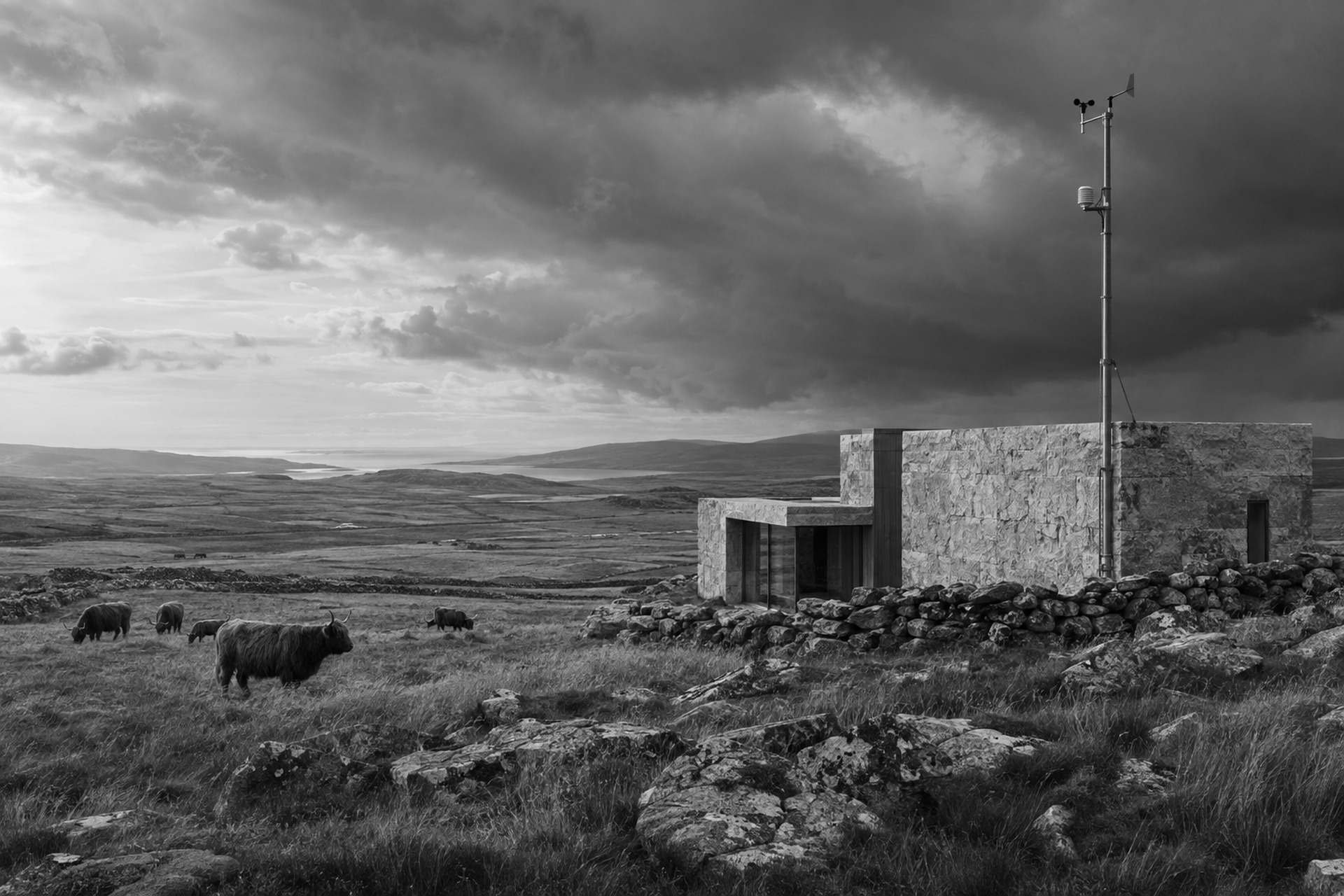
Front inbound · ETA 04:12:00
Read the sky before the herd does.
Halden is a field console that watches cloud build-up, wind and pasture moisture over your range, and tells you when to move cattle, hours before the front arrives.
North range: move Herd B to Lee B before the front reaches the ridge.
Paddock entry
Cam 2 · Herd
Unit 02 · Pressure
00 · 08
hPa / 6 h
Cloud build
Wind · Gain
Pasture moisture
Next move
Window
Range select
F1–F4 · 0–9 + ENT
The station
A weather station that thinks in paddocks.
Forecasts are written for towns. Your herd lives forty kilometres from the nearest one, on ground where a front can cross a ridge and drop the temperature twelve degrees in an hour.
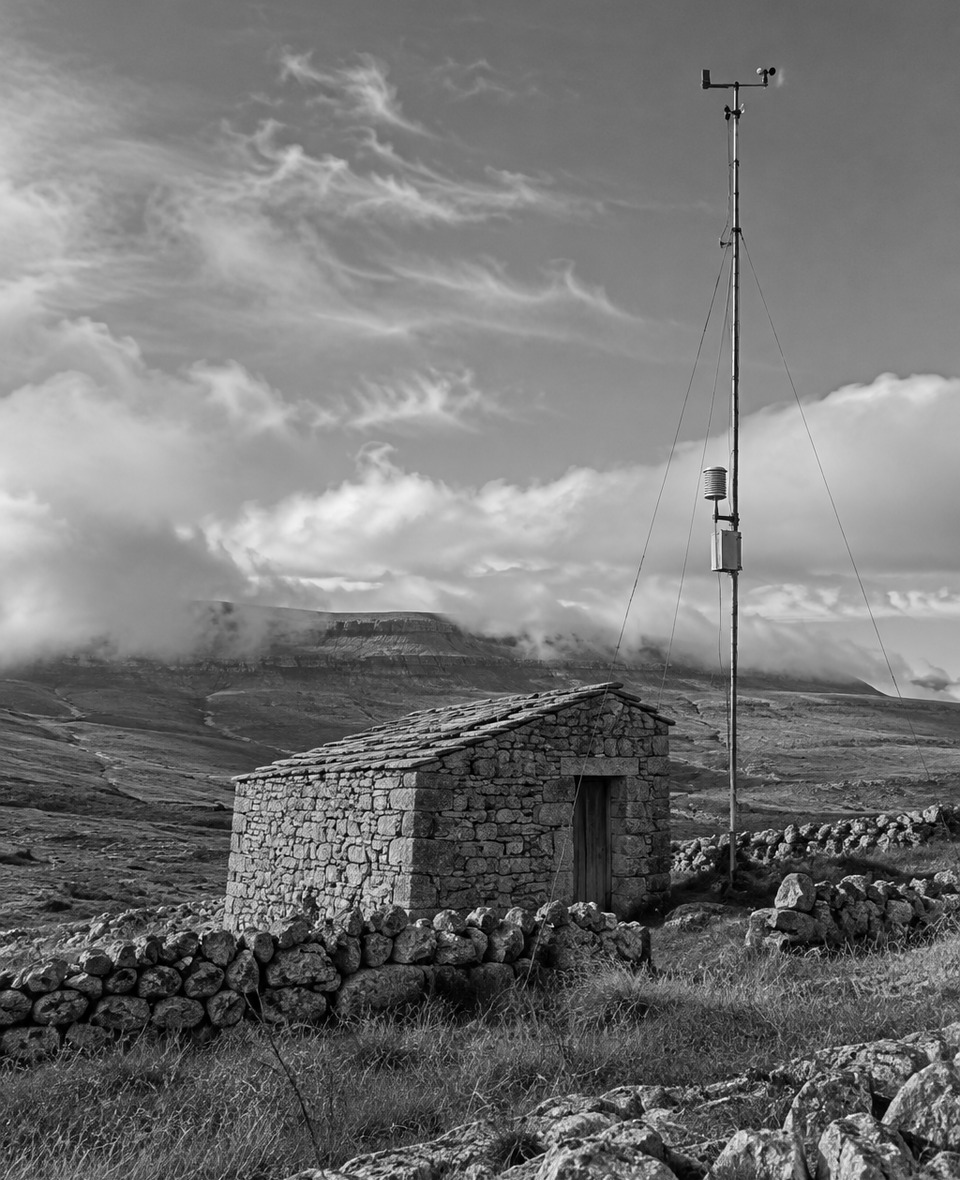
Halden puts one nine-metre mast on your range and one console on your desk. The mast watches the sky the way a stockman does: how fast the cloud is building, which way the wind is backing, how wet the grass is underfoot. The console turns that into one plain instruction: which paddock, and by when.
Cam 3 · Mast view
-
6 h
Median warning before a front reaches the herd.
-
40 km
Radius of sky and ground read from a single mast.
-
11 W
Draw of the whole station. One solar panel runs it.
Instruments
Four modules. One instruction.
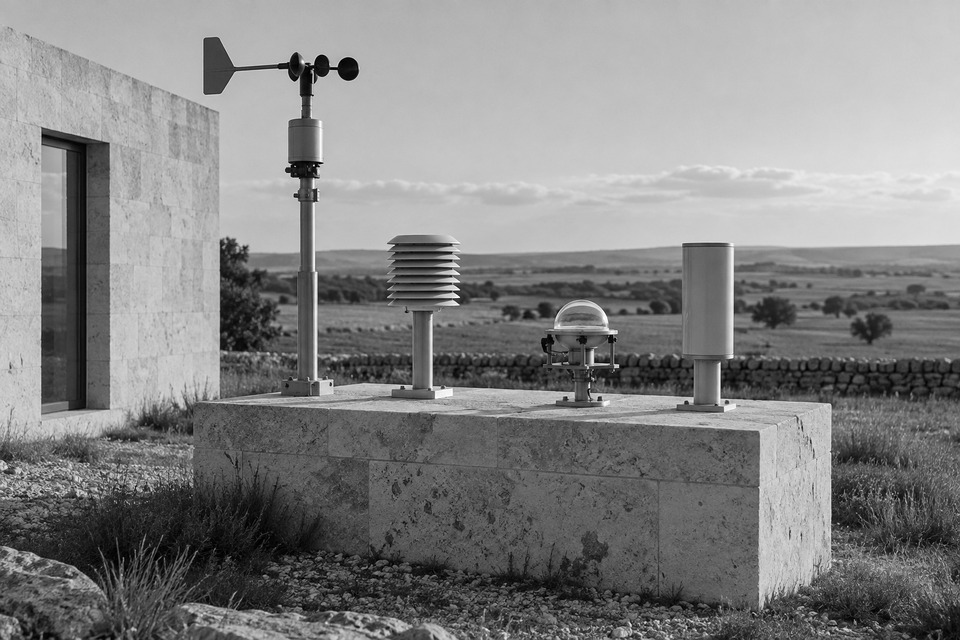
Each module does one job and shows its work on a readout you can check at a glance, with gloves on, from across the room.
-
1
Cloud build
Index 0.72 · RisingSees towers forming
A sky camera scores vertical growth every ninety seconds, so a cell that will matter by dusk is flagged at lunch.
-
2
Wind shear
14 kt NW · BackingKnows the lee side
Two anemometers at three and nine metres catch the shift early and name the paddock that will be sheltered when it lands.
-
3
Pasture moisture
31% · Firm footingReads the ground too
Buried probes tell you which gates will be mud after the rain, so the route you pick is one the herd can walk.
-
4
Herd position
Herd B · 48 headCounts who is where
Collar pings place every group on the map. The move window is worked out from how far they have to go.
Printer · Day log
- 05:40Cloud base dropping over the west ridge. Watching.
- 08:15Build index 0.55 and rising. Wind backing NW.
- 09:10Advice: move Herd B from Paddock C to Lee B before 13:20.
- 11:45Herd B through the east gate. 48 of 48 counted.
- 13:30Front on the mast. Gusts 41 kt. Hail, nine minutes.
- 14:05Clear. No losses. Log closed.
Field log
One Tuesday on the north range.
Six lines, one decision. The console does not ask you to study a radar loop. It tells you what it saw, what it advises, and whether the herd made it.
“I used to stand on the porch and guess. Now I read one line at breakfast and we are done moving by noon.”
Order
Put a console on your desk before spring.
We build in small batches and install each station ourselves. Tell us the size of your range and we will reply with a mast position, a price and a date.
Next batch ships
March · 40 unitsInstall
One day · Two peopleSubscription
None · You own it